
1.928.288.5477      office@biblicalassociation.org


Top

THE ASSOCIATION FOR BIBLICAL SCIENCE & ARCHAEOLOGY

Explore Our Solar System

Journey from the brilliance of the Sun to distant Pluto, exploring the wonders of our solar system through a biblical creation perspective. Study the measurable features of each world alongside the biblical account of Creation Week and the remarkable order and variety of the heavens.

Explore the Solar System

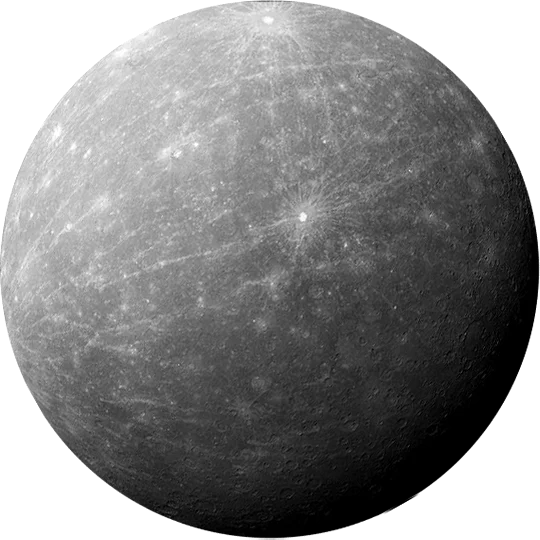
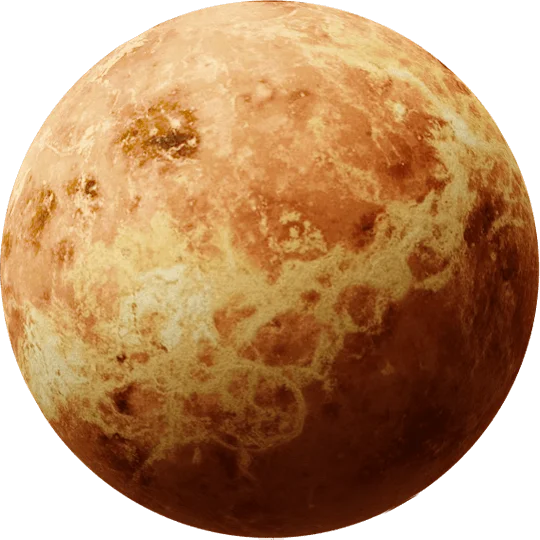
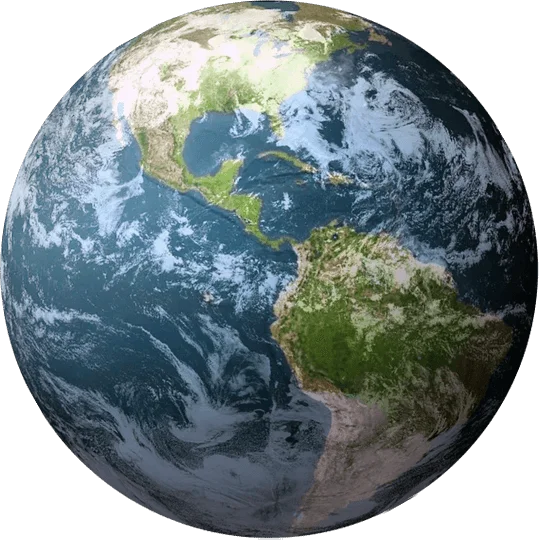
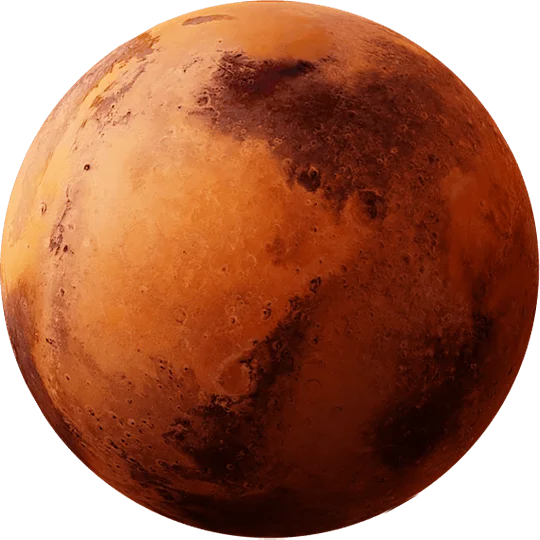
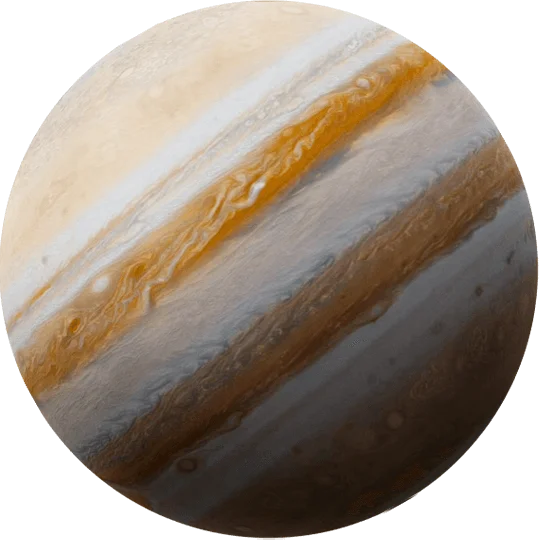
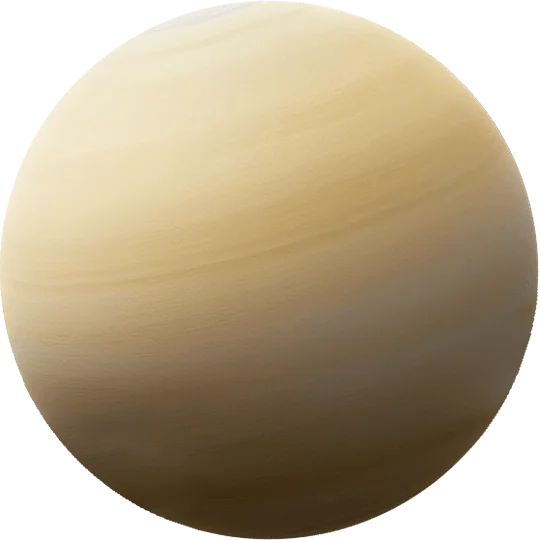
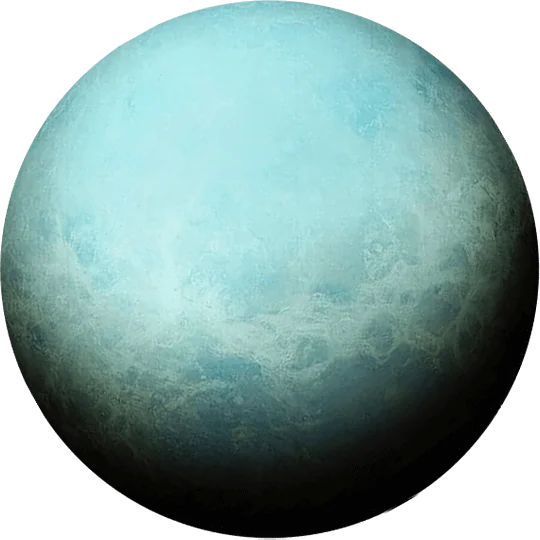
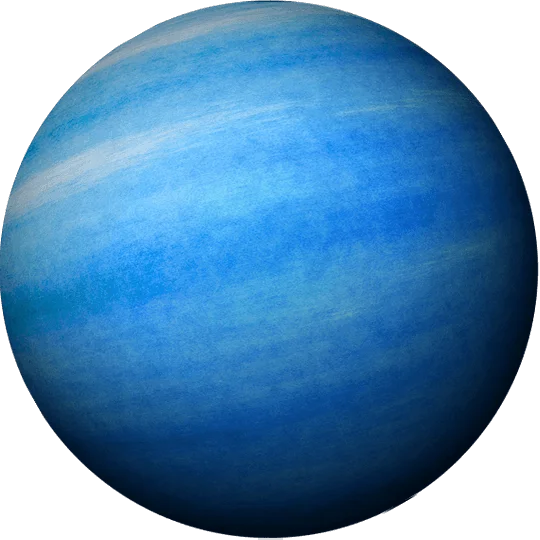
{{current_slide_index}} / {{total_slide_count}} Genesis 1:14–19 places the creation of the Sun on Day Four, appointed to mark days, seasons, and years. This immense star supplies Earth with light and warmth from an average distance of about 93 million miles. more facts sun the greater light biblical origin Creation Day Four star Type Yellow Dwarf Radius 432,700 miles temperature about 9,930°F {{current_slide_index}} / {{total_slide_count}} Mercury races around the Sun in only 88 Earth days. Though it is the smallest planet, it has a magnetic field. Young-earth creation researchers examine such fields when studying planetary origins and history. more facts Length of Year 88 Earth days Planet Type Terrestrial Radius 1,516 miles distance from sun 36 million miles mercury swiftest orbit {{current_slide_index}} / {{total_slide_count}} Venus is nearly the size of Earth, yet its surface is hot enough to melt lead. It spins opposite to most planets, showcasing the remarkable variety of heavenly bodies God created on Day Four. more facts venus the backward spinner Length of Year 225 Earth days Planet Type Terrestrial Radius 3,760 miles distance from sun 67.2 million miles {{current_slide_index}} / {{total_slide_count}} Genesis describes Earth as formed before the Sun and the other planets. With oceans of liquid water, a protective atmosphere, and abundant life, our home is exceptionally suited for the creatures God made to inhabit it. more facts Length of Year 365.25 Earth days Planet Type Terrestrial Radius 3,959 miles distance from sun 93 million miles earth made for life {{current_slide_index}} / {{total_slide_count}} Mars has a day just 39 minutes longer than an Earth day, giant volcanoes, and vast channels shaped by flowing water. Its rusty, iron-rich landscape reveals a world dramatically different from our own. more facts mars the rusty world Length of Year 687 Earth days Planet Type Terrestrial Radius 2,106 miles distance from sun 141.6 million miles {{current_slide_index}} / {{total_slide_count}} Jupiter is the largest planet, with a day shorter than ten hours and storms wider than Earth. Its powerful magnetic field and substantial internal heat are subjects of interest to young-earth creation astronomers. more facts jupiter giant of the planets Length of Year 11.9 Earth years Planet Type Gas Giant Radius 44,423 miles distance from sun 484 million miles {{current_slide_index}} / {{total_slide_count}} Saturn's majestic rings consist mostly of countless icy particles. The ongoing evolution of its ring system is one reason creation researchers question assumptions about enormous ages for individual planetary features. more facts saturn rings of icy wonder Length of Year 29.5 Earth years Planet Type Gas Giant Radius 36,184 miles distance from sun 890 million miles {{current_slide_index}} / {{total_slide_count}} Uranus spins almost on its side, giving it extreme seasons during its 84-Earth-year orbit. Its unusual rotation and magnetic field showcase the striking variety of planets described as part of God's creation. more facts Length of Year 84 Earth years Planet Type Ice Giant Radius 15,759 miles distance from sun 1.78 billion miles uranus the sideways planet {{current_slide_index}} / {{total_slide_count}} Though sunlight is faint at Neptune, its atmosphere produces winds exceeding 1,000 miles per hour. The planet also releases substantial internal heat, a phenomenon young-earth creationists discuss when studying planetary history. more facts neptune the windy frontier Length of Year 164.8 Earth years Planet Type Ice Giant Radius 15,299 miles distance from sun 2.80 billion miles {{current_slide_index}} / {{total_slide_count}} Discovered in 1930 at Lowell Observatory in Flagstaff, Arizona, where ABSA is based today. Reclassified as a dwarf planet in 2006, Pluto still inspires wonder with its icy mountains and striking plains. more facts pluto our Flagstaff favorite Length of Year 248 Earth years Planet Type Dwarf Planet Radius 739 miles distance from sun 3.7 billion miles mars next prev scroll Explore Our Solar System earth venus mercury sun jupiter saturn uranus neptune pluto

EXPLORE THE DETAILS

Ten Bodies. More Than Meets the Eye.

Open any item below to explore its remarkable features, examine the evidence through a biblical creation perspective, and consider a question for further investigation.

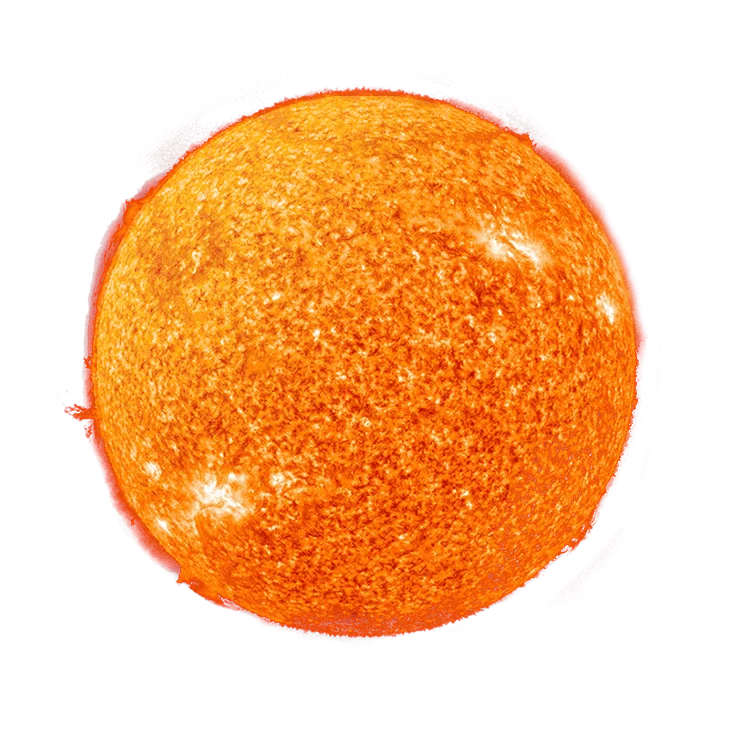
DAY FOUR • OUR STARThe SunThe greater light — a remarkably stable star that sustains life on Earth.93 million miles from Earth

Remarkable features

A star of extraordinary scale

The Sun is roughly 109 times Earth’s diameter. It contains about 99.86% of the solar system’s total mass, and more than a million Earths would fit inside its volume.

Light on an eight-minute journey

Sunlight travels the approximately 93 million miles to Earth in about 8 minutes and 20 seconds. The Sun’s visible surface is about 9,900°F.

A changing magnetic face

Sunspots, solar flares, and the roughly 11-year sunspot cycle reveal a dynamic magnetic star. Its core releases energy through nuclear fusion.

THROUGH A BIBLICAL CREATION LENS

Creation perspective

Genesis 1:14–19 identifies the Sun as the greater light appointed for the fourth day, governing the day and marking seasons and years. In this framework, the Sun is not the ultimate source of life: God created Earth and vegetation before the Sun. Its dependable energy output, great brightness, and distance from Earth are vital features of a world suited for life.

A question worth exploring

What do Genesis 1:14–19 and Psalm 19:1–6 say about the purpose of the heavenly lights?

01 • THE INNERMOST PLANETMercuryA small, heavily cratered planet whose sunrise can appear to reverse.88 Earth days per year

Remarkable features

A year shorter than a season

Mercury orbits the Sun every 88 Earth days, yet one sunrise-to-sunrise solar day is about 176 Earth days because of its unusual rotation and orbital motion.

Where the Sun seems to retreat

Near certain points in Mercury’s orbit, the Sun can briefly appear to stop, reverse, and then resume moving across the sky.

Extreme contrasts

With almost no substantial atmosphere to distribute heat, Mercury experiences enormous day-to-night temperature changes. Its permanently shadowed polar craters may preserve water ice.

A small world with a field

Despite its small size, Mercury possesses a global magnetic field, a feature of particular interest in research into planetary interiors.

THROUGH A BIBLICAL CREATION LENS

Creation perspective

Mercury’s global magnetic field is especially intriguing for such a small planet. Alongside its unusual rotation, dramatic temperature contrasts, and possible polar ice, it presents a remarkable range of features to investigate. The varied properties of this small world contribute to the diversity of the heavens described in Scripture.

A question worth exploring

What can Mercury’s magnetic field reveal about the conditions within this small planet?

02 • THE BRIGHTEST PLANETVenusNearly Earth-sized, yet scorching and turning in the opposite direction.67.2 million miles from the Sun

Remarkable features

Earth’s very different sister

Venus is about 95% of Earth’s diameter, but its crushing atmosphere creates surface pressures roughly 90 times those on Earth.

Even hotter than Mercury

Its thick carbon-dioxide atmosphere drives temperatures near 870°F across much of the surface, hot enough to melt lead.

The planet that spins backward

Most planets rotate in the same general direction; Venus turns retrograde. Its axial rotation takes about 243 Earth days, longer than its 225-day year.

Clouds that hide the ground

Venus is bright in our sky because its thick cloud deck reflects sunlight. The clouds contain sulfuric-acid droplets.

THROUGH A BIBLICAL CREATION LENS

Creation perspective

Venus is nearly Earth’s size, yet its dense atmosphere, extreme surface heat, and backward rotation make it strikingly different from our home planet. These contrasts showcase the extraordinary variety among the heavenly bodies that Genesis 1 places within Day Four of Creation Week.

A question worth exploring

Why does a world close to Earth in size differ so dramatically in atmosphere, temperature, and rotation?

03 • OUR HOMEEarthThe only known planet with enduring surface oceans and abundant life.93 million miles from the Sun

Remarkable features

A world of liquid water

Oceans cover roughly 71% of Earth’s surface. Liquid water, a suitable atmosphere, and moderate surface temperatures support an enormous range of living things.

A protective environment

Earth’s atmosphere filters harmful radiation, while its magnetic field deflects much of the charged-particle solar wind.

One day, one year

Earth rotates approximately once in 24 hours and completes an orbit around the Sun in about 365¼ days. Its tilted axis produces the seasons.

The Moon and tides

The Moon contributes to ocean tides and is a prominent timekeeper in human calendars. Genesis names the lesser light as another Day Four luminary.

THROUGH A BIBLICAL CREATION LENS

Creation perspective

Genesis 1 describes Earth, the waters, dry land, and vegetation before the creation of the Sun, Moon, and stars on Day Four. The heavenly lights were appointed to illuminate the Earth and mark days, seasons, and years. Earth’s abundant water, protective atmosphere, and remarkable suitability for life reflect the biblical picture of a world purposefully prepared to be inhabited.

A question worth exploring

Why does Genesis describe Earth before the Sun, and what purposes does it assign to the heavenly lights?

04 • THE RED PLANETMarsRust-colored deserts, polar ice, towering volcanoes, and evidence of flowing water.141.6 million miles from the Sun

Remarkable features

An almost familiar day

A Martian day, called a sol, lasts around 24 hours and 39 minutes. Mars also has a seasonal tilt broadly similar to Earth’s.

The biggest landmarks

Olympus Mons rises roughly 16 miles above its surroundings; the vast Valles Marineris canyon system stretches for about 2,500 miles.

Why Mars is red

Iron-bearing minerals on its surface have undergone oxidation, giving much of the planet its rusty reddish hue.

Traces of flowing water

Valley networks, channels, delta-like deposits, and other landforms point to the past action of flowing water on Mars, even though liquid water is scarce at its surface today.

THROUGH A BIBLICAL CREATION LENS

Creation perspective

Mars’s extensive channels, valleys, and sedimentary features invite careful investigation of the movement of water and the forces that shaped its surface. Some landforms suggest powerful flows capable of rapidly altering a landscape. These features deserve study on their own terms, without simply applying the history of Earth’s Flood to another planet.

A question worth exploring

Which Martian landforms can be explained by rapid flows, and what additional evidence would be needed to reconstruct the sequence?

05 • THE GIANTJupiterThe largest planet — a rapidly rotating world of colossal storms and powerful magnetism.About 484 million miles from the Sun

Remarkable features

A thousand Earth-sized worlds

Jupiter has over 1,300 times Earth’s volume and more than twice the mass of all the other planets combined.

Fastest giant spin

One Jovian rotation takes only about 9 hours and 56 minutes, creating a pronounced equatorial bulge.

Storms and moons

The Great Red Spot is a vast, long-lived storm. Its major moons include volcanic Io, ice-covered Europa, enormous Ganymede, and heavily cratered Callisto.

An energetic interior

Jupiter radiates more total energy than it receives from the Sun and possesses an exceptionally strong planetary magnetic field.

THROUGH A BIBLICAL CREATION LENS

Creation perspective

Jupiter’s immense size, powerful magnetic field, enormous storms, and remarkable moons make it a fascinating subject for observation and research. Its internal heat and active atmosphere reveal an energetic and complex world. Within the biblical account of creation, its scale, motion, and variety display the Creator’s power.

A question worth exploring

What powers Jupiter’s storms, and how does its heat budget constrain models of its interior?

06 • THE RINGED PLANETSaturnAn intricate ring system composed of countless icy particles.About 890 million miles from the Sun

Remarkable features

Light enough to float — in theory

Saturn’s mean density is lower than liquid water. The familiar comparison is purely illustrative: no enormous ocean could actually hold it.

Rings that are incredibly thin

The broad main ring system extends about 170,000 miles across but is astonishingly thin compared with its width. Much of it consists of water ice.

Moons that sculpt the rings

Orbital resonances and gravitational interactions with moons help shape gaps and edges, including the celebrated Cassini Division.

Surprising moons

Titan has a thick nitrogen-rich atmosphere and methane weather. Enceladus sprays water-rich material from its south-polar region.

THROUGH A BIBLICAL CREATION LENS

Creation perspective

Saturn’s rings are composed of countless icy particles influenced by gravity and interactions with the planet’s moons. Their intricate gaps, bands, and patterns form a striking system to study. Together with the extraordinary features of moons such as Titan and Enceladus, they display the remarkable variety of the created heavens.

A question worth exploring

How do Saturn’s gravity and its moons shape the distinct bands and gaps within its rings?

07 • THE SIDEWAYS WORLDUranusAn ice giant with a nearly sideways rotation axis and extreme seasonal cycles.84 Earth years per orbit

Remarkable features

Rolling through space

Uranus’s rotation axis is tipped about 98 degrees relative to its orbital plane. That geometry gives its poles prolonged periods of illumination or darkness.

An exceptionally cold atmosphere

Some of the lowest temperatures measured in a planetary atmosphere occur here, near –371°F.

A strangely oriented magnetic field

The planet’s magnetic field is tilted and offset relative to its rotation axis, unlike the simpler picture often drawn for Earth.

Pale blue and ringed

Atmospheric methane helps give Uranus its blue-green appearance. It also has a system of narrow dark rings.

THROUGH A BIBLICAL CREATION LENS

Creation perspective

Uranus rotates with its axis tipped dramatically relative to its orbit, and Voyager 2 measured a magnetic field that is both tilted and offset. These extraordinary characteristics make Uranus unlike its planetary neighbors and invite closer study of its interior, rotation, and unusual seasons.

A question worth exploring

How does Uranus’s extreme axial tilt affect the pattern of sunlight during its long seasons?

08 • THE WINDY FRONTIERNeptuneDistant, dark-blue, and astonishingly energetic.About 2.8 billion miles from the Sun

Remarkable features

A very long year

Neptune needs approximately 164.8 Earth years to complete one orbit, although it rotates in roughly 16 hours.

The solar system’s fierce winds

Measured winds can exceed 1,000 miles per hour. Powerful storms appear and evolve despite the weak sunlight at Neptune’s distance.

A source of internal heat

Neptune emits substantially more energy than it receives from the Sun; its internal heat contributes to atmospheric activity.

A moon going the other way

Triton, its largest moon, travels in a retrograde orbit — opposite Neptune’s rotation. Voyager 2 also observed nitrogen-rich geyser-like plumes there.

THROUGH A BIBLICAL CREATION LENS

Creation perspective

Neptune’s fierce winds, internal heat, unusual magnetic field, and retrograde moon Triton reveal a distant planet full of remarkable activity. Despite the weak sunlight at its great distance, Neptune emits substantial energy and sustains powerful atmospheric storms. Its distinctive features display the diversity of the heavenly bodies created by God.

A question worth exploring

How can Neptune sustain such powerful winds and storms while receiving so little sunlight?

09 • IS IT STILL A PLANET?PlutoOnce called the ninth planet, still a remarkable world — and discovered right here in Flagstaff.248 Earth years per orbit

Remarkable features

Discovered in our hometown

On February 18, 1930, Clyde Tombaugh identified Pluto by comparing photographic plates taken at Lowell Observatory in Flagstaff, Arizona. ABSA is based in the same city, giving this distant world a special hometown connection.

Why the designation changed

Pluto was widely regarded as the ninth planet until 2006, when the International Astronomical Union classified it as a dwarf planet. Pluto orbits the Sun and is nearly round, but it has not cleared its orbital neighborhood of other objects.

A world of icy mountains and plains

During its 2015 flyby, NASA’s New Horizons revealed mountains of water ice, a thin atmosphere, and broad nitrogen-ice plains in Pluto’s heart-shaped Tombaugh Regio. Some plains are remarkably smooth and nearly free of visible impact craters, with patterns interpreted as evidence of moving ice.

Far away, with a long year

Pluto averages roughly 3.7 billion miles from the Sun, measures about 1,477 miles across, and needs approximately 248 Earth years to complete one solar orbit. Its largest moon, Charon, is unusually large compared with Pluto.

THROUGH A BIBLICAL CREATION LENS

Creation perspective

Before the New Horizons flyby, Pluto was often expected to be a largely frozen, geologically inactive world. Instead, researchers found remarkably smooth, sparsely cratered terrain and signs of flowing ice. Mission scientists described parts of the surface as geologically young-looking, a striking surprise that challenged expectations about activity on such a distant world. Pluto’s remarkable landscape adds to the variety of the heavens that declare God’s glory (Psalm 19:1).

A question worth exploring

Why did Pluto’s young-looking, nearly crater-free plains and apparent ice movement surprise scientists who expected a mostly inactive world?

Image credit: NASA / Johns Hopkins Applied Physics Laboratory / Southwest Research Institute. Discovery history: Lowell Observatory Archives. New Horizons findings: NASA.

A BIBLICAL PERSPECTIVE OF THE HEAVENS

Studying with Scripture in View

The origin of the heavens from the biblical account of Creation Week.

Genesis presents the universe as the intentional work of God. The heavens are not self-created or without purpose: Scripture records a beginning, an ordered sequence of creation, and heavenly lights appointed for life on Earth. That account provides our starting point as we study the remarkable features of the solar system.

DAY ONE GENESIS 1:1–5

The beginning and the light

Genesis opens with God creating the heavens and the Earth. On Day One, He commands light to appear, separates light from darkness, and names them day and night. The first evening-and-morning cycle is recorded before the Sun, Moon, and stars are made on Day Four. This sequence is significant: the biblical account does not make the Sun the ultimate source of light, time, or existence. Scripture does not explain the physical mechanism of that first light, and we need not invent one. Instead, it presents light and the ordered rhythm of day and night as the work of the Creator, challenging the notion that the universe must be self-originating or that the heavenly bodies existed from eternity.

DAY TWO GENESIS 1:6–8

The expanse established

On Day Two, God makes the expanse, or firmament, separating waters below it from waters above and calling the expanse Heaven. The emphasis in Genesis 1:6–8 is on God deliberately ordering what He has made. Later in the chapter, birds are described as flying across the face of the expanse (Genesis 1:20), while the heavenly lights are placed in the expanse on Day Four (Genesis 1:14–17). These passages help us read the account in its own biblical context. They do not supply a detailed scientific diagram of the atmosphere or explain every feature of the waters above. A biblical approach begins with what the text states, distinguishes that from proposed physical models, and recognizes the sky and heavens as part of God's purposeful creation.

DAY FOUR GENESIS 1:14–19

The Sun, Moon, and stars

On Day Four, God makes the Sun to govern the day, the Moon to govern the night, and the stars (Genesis 1:14–19). The Earth already exists before these lights appear. God appoints them to illuminate the Earth and mark signs, seasons, days, and years. Since early history, people have used the Sun’s path, the Moon’s phases, and the stars to track calendars, planting and harvest seasons, navigation, and important gatherings. Leviticus 23 likewise connects appointed festivals with the calendar. Rather than presenting the heavenly bodies as gods, Genesis identifies them as created lights with assigned purposes. Their predictable patterns invite study and point to the Creator.

WHAT SCRIPTURE REVEALS ABOUT THE HEAVENS

PSALM 19:1–4

They declare His glory

The heavens testify to the glory and handiwork of their Creator. Their beauty and grandeur direct our attention beyond the stars themselves.

ISAIAH 40:26 · PSALM 147:4

They are known to God

The One who brought out the starry host knows its members by name. The scale of the heavens displays His power, wisdom, and care.

COLOSSIANS 1:16–17

They are sustained by Christ

Scripture identifies Christ as the One through whom all things were created and in whom all things hold together. Creation remains dependent on its Maker.