

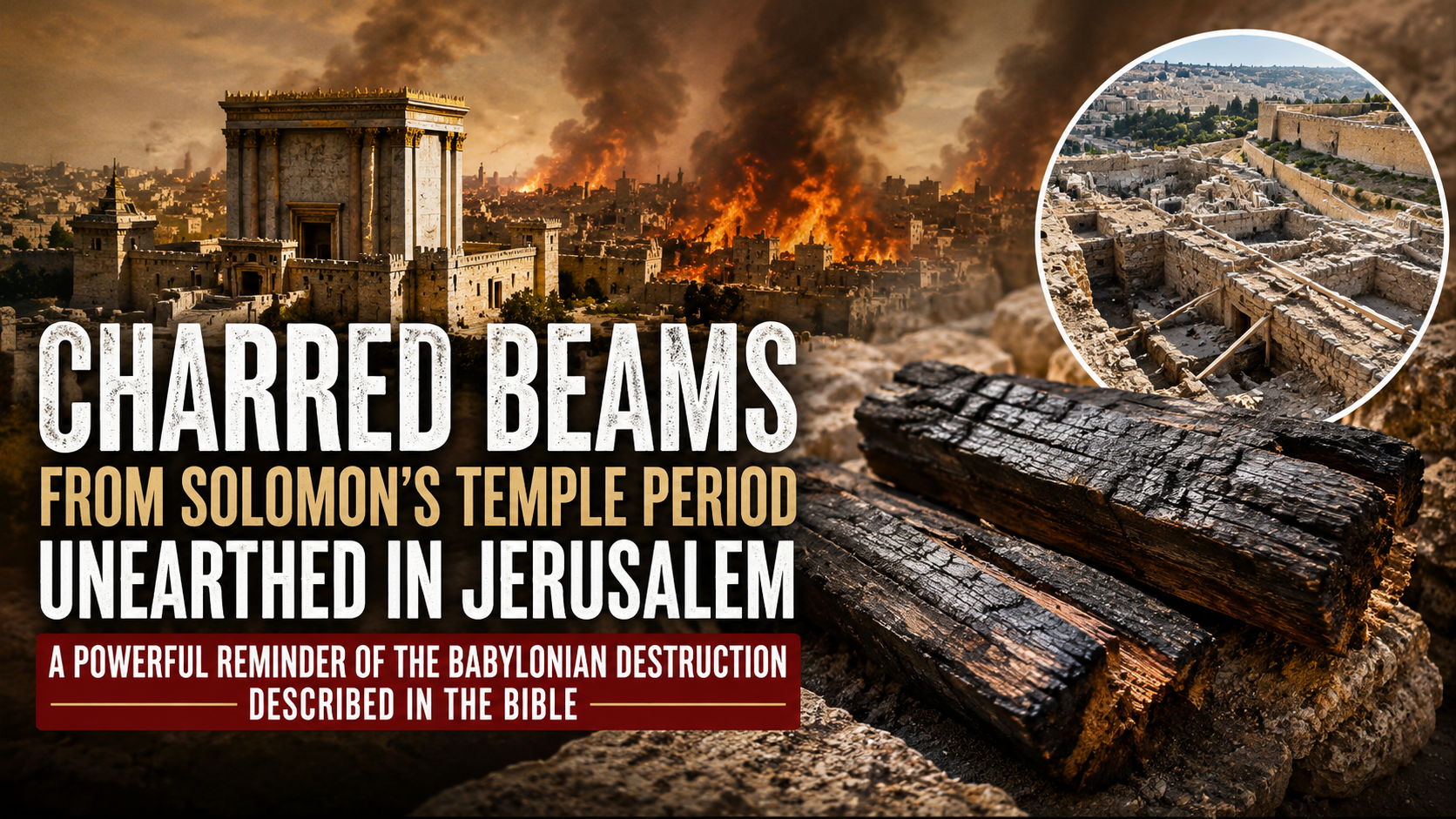
JERUSALEM — July 20, 2026 Archaeologists excavating in Jerusalem’s City of David have uncovered massive wooden beams that appear to have been burned when the Babylonian army destroyed the city approximately 2,600 years ago. The unusually well-preserved timbers were found amid the collapsed remains of a building dating to the final years of the First Temple period, offering researchers a rare opportunity to study wood associated with one of the most consequential events in biblical history.
The discovery was announced on July 20 by the Israel Antiquities Authority and the City of David, just days before the observance of Tisha B’Av, the annual Jewish day of mourning associated with the destruction of both the First and Second Temples.
The excavations are being conducted by the Israel Antiquities Authority and Tel Aviv University at the Givati Parking Lot excavation in Jerusalem Walls National Park. The site lies within the City of David, the ancient ridge immediately south of the Temple Mount where much of biblical Jerusalem was located.
Excavation director Efrat Bocher said the beams apparently formed part of the roof over an interior courtyard. When the building burned, the timbers collapsed onto the floor and were buried beneath the ruined structure.
“The beams appear to have served as the roof of an inner courtyard,” Bocher explained in the official announcement.
Researchers believe that plaster covering the building’s walls was heated during the fire, broke away, and fell over the charred wood. This created a protective layer that sealed portions of the beams beneath the destruction debris and helped preserve them for approximately 2,600 years.
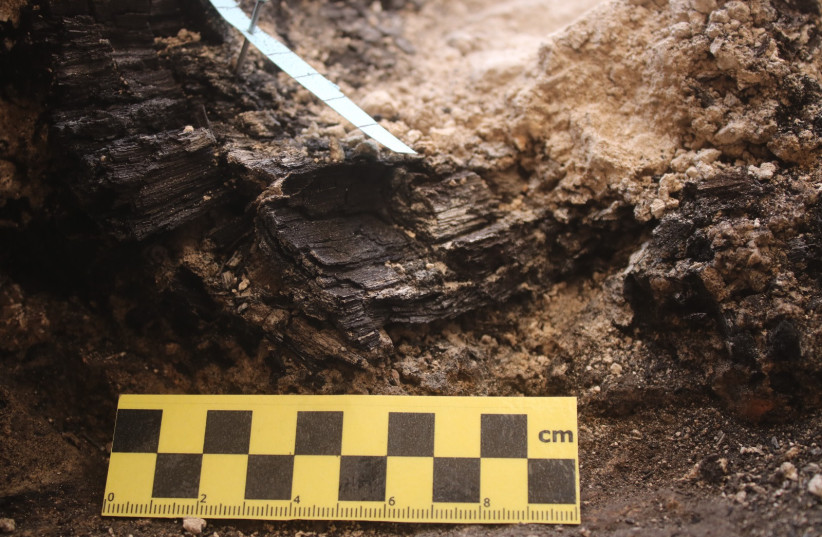
July 20, 2026: Beams discovered in the City of David. (credit: Efrat Bocher)
The discovery is remarkable because wood normally decomposes quickly in Israel’s climate. Archaeologists frequently uncover stone foundations, walls, pottery, and other durable objects from the Iron Age, but substantial wooden architectural elements are far less common. These beams are particularly valuable because they are thick and contain numerous visible growth rings.
Dr. Johanna Regev of the Israel Antiquities Authority, who is studying the timbers, said that wood with such an extensive sequence of growth rings is exceptionally rare in Israel.
“Here in the City of David, we found thick beams with many rings,” Regev said, describing the material as having considerable research potential.
Those rings may allow researchers to use dendrochronology—the scientific study of annual tree-growth patterns—to date the beams with far greater precision than is normally possible with archaeological material from the period. According to Regev, many finds can currently be dated only within broad ranges spanning decades or even centuries. A long sequence of tree rings could potentially reduce that range to approximately ten years.
That does not necessarily mean the beams have already been dated specifically to 586 BC. Further analysis will be needed to identify the wood, establish its growth sequence, compare it with regional chronologies, and determine when the trees were cut. Nevertheless, the archaeological setting strongly connects the building with the widespread destruction of Jerusalem near the end of the kingdom of Judah.
Not Beams from Solomon’s Temple
Some early headlines described the discovery as charred wood “from Solomon’s Temple.” That wording goes beyond what archaeologists have actually reported.
The beams were not discovered on the Temple Mount, nor have researchers identified them as structural elements from the temple itself. They were found in a separate building in the City of David, south of the Temple Mount. The structure dates to the First Temple period and appears to have been destroyed in the same Babylonian attack that also consumed the temple and much of Jerusalem.
The term “First Temple period” refers broadly to the era in which Solomon’s Temple stood in Jerusalem, from its construction during Solomon’s reign until its destruction by the Babylonians. An artifact or building from the First Temple period is therefore not necessarily an artifact from the temple.
What archaeologists appear to have uncovered is part of a substantial Jerusalem building that stood during the final years of Judah, burned in a catastrophic fire, and collapsed during the destruction of the city.
Jerusalem’s Destruction in the Biblical Record
The Bible gives a detailed account of Jerusalem’s fall during the reign of King Zedekiah. After a prolonged siege, the Babylonian army broke through the city’s defenses. Zedekiah attempted to flee but was captured, while Jerusalem was placed under Babylonian control.
Second Kings records that Nebuzaradan, an officer serving Nebuchadnezzar, entered Jerusalem and “burned the house of the Lord, and the king’s house, and all the houses of Jerusalem.” The account emphasizes that the Babylonians did not burn only the temple. The destruction extended throughout the city, particularly to its prominent buildings.
The book of Jeremiah gives a similar description, stating that the Babylonians burned the temple, the royal palace, and the houses of Jerusalem before tearing down the city walls. Second Chronicles likewise describes the burning of the temple and its palaces, the destruction of its precious objects, and the exile of the surviving population.
The newly discovered beams fit within that larger picture. They are not isolated evidence of a small accidental fire. They were recovered from a collapsed building within a broader archaeological context associated with the violent destruction of Jerusalem at the end of the Iron Age.
The generally accepted historical date for the fall of Jerusalem is 586 BC, although some scholars favor 587 BC based on differing reconstructions of Babylonian and Judean chronology. Either date places the destruction during the reign of the Babylonian king Nebuchadnezzar II and agrees closely with the historical framework recorded in Scripture.
A Growing Archaeological Picture
The charred timbers join a growing collection of discoveries from Jerusalem that illustrate the city’s final decades before the Babylonian conquest.
Excavations in the City of David and nearby areas have uncovered collapsed walls, ash deposits, burned pottery, shattered storage jars, stone debris, seal impressions, administrative objects, and Babylonian-style arrowheads. In several locations, excavators have found substantial buildings that were violently destroyed during the sixth century BC.
One prominent example is a large public building excavated on the eastern slope of the City of David. Archaeologists found rows of storage jars smashed when the structure burned and collapsed. Some of the jars bore rosette-stamped handles associated with the final administrative phase of the kingdom of Judah.
Elsewhere in Jerusalem, archaeologists have recovered clay bullae bearing Hebrew names, including some that correspond with names known from the biblical period. Such finds reveal a city with an established bureaucracy, organized administration, international connections, substantial architecture, and a literate population immediately before its destruction.
The wooden beams now add something rarely available in biblical archaeology: a surviving portion of the buildings themselves, preserved not only as stone foundations but as timbers blackened by the fire that brought them down.
A Landscape of Memory
The excavation team has also proposed that the ruined structure may have remained visible after Judean exiles began returning to Jerusalem under Persian rule.
Dr. Yiftah Shalev of the Israel Antiquities Authority, who directs the excavation with Professor Yuval Gadot of Tel Aviv University, described this as a possible “landscape of memory.” Rather than completely clearing the remains of the burned city, later residents may have deliberately left portions of the destruction exposed while constructing new buildings nearby or above them.
“Preserving memory is a human need,” Shalev said. He suggested that the ruins may have been left as a visible testimony to what Jerusalem had endured.
The suggestion is especially meaningful when considered alongside the biblical books written during and after the exile. Lamentations mourns a city left desolate after the burning of its gates and sanctuaries. Ezra and Nehemiah describe returning exiles rebuilding amid the ruins of Jerusalem. The prophets repeatedly called the people to remember both the consequences of rebellion and the faithfulness of God in restoring a remnant.
The physical remains of the ruined city would have surrounded those who returned. Burned buildings, broken walls, abandoned foundations, and collapsed timbers were not distant memories. They were part of Jerusalem’s landscape.
A Discovery Announced Before Tisha B’Av
The timing of the announcement added another layer of significance. Tisha B’Av commemorates the destruction of the First Temple by the Babylonians and the Second Temple by the Romans centuries later. The day is traditionally marked by fasting, mourning, and readings from the book of Lamentations.
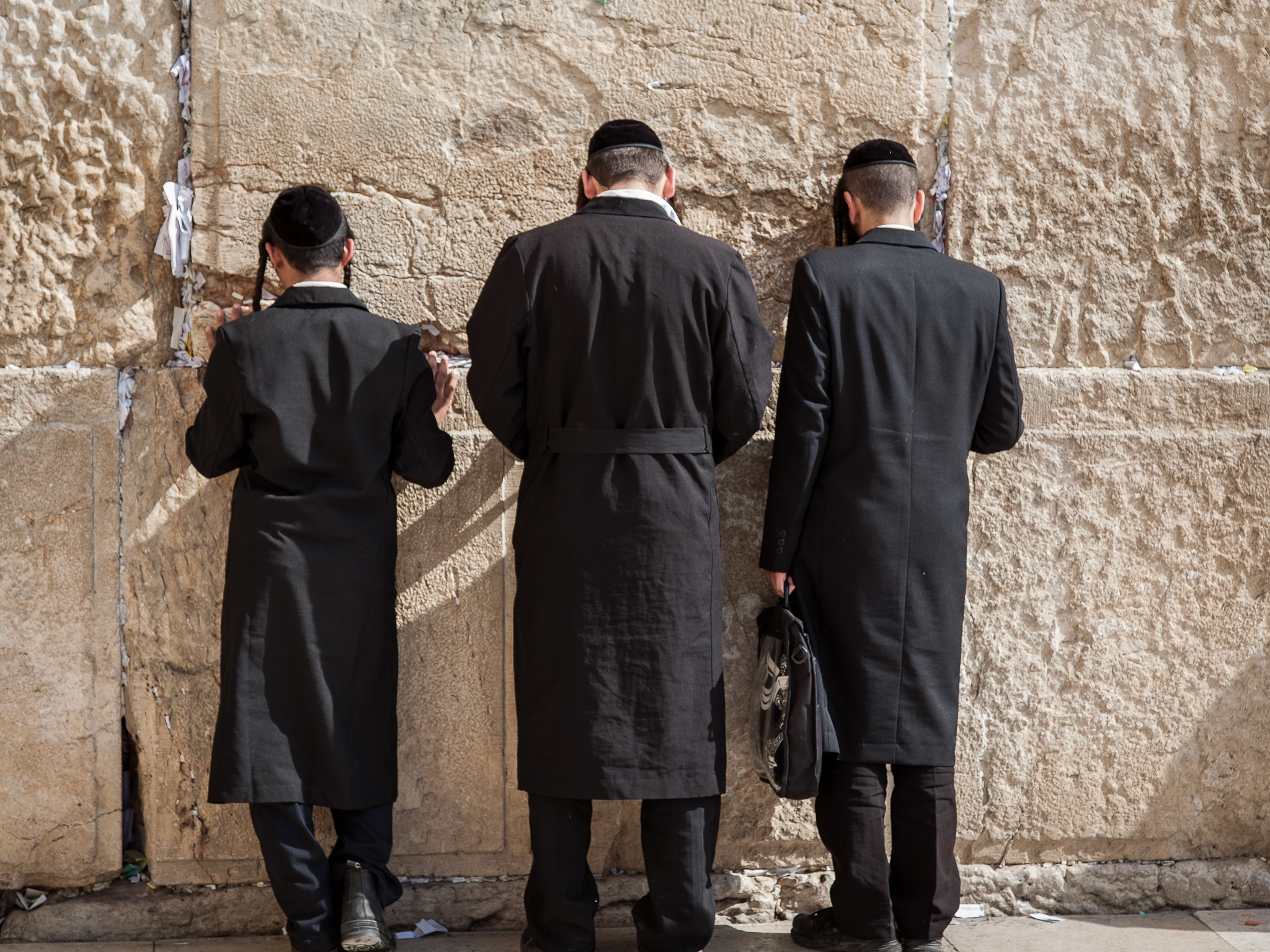
“We are just before Tisha B’Av,” Bocher said. “This discovery makes you feel that you are witnessing the very moment of destruction.”
That emotional connection is understandable. Archaeology often deals with fragments: pieces of pottery, sections of walls, small seals, or scattered debris. A large wooden beam still visibly burned from an ancient fire creates a more immediate encounter with the past. It once supported a roof over people who lived and worked in Jerusalem. It then fell as their city burned around them.
The find takes an event commonly encountered through biblical text and allows us to see part of its physical aftermath.
What the Discovery Does—and Does Not—Demonstrate
It would be inaccurate to claim that the discovery proves the existence of Solomon’s Temple by itself. The beams did not come from the temple, and they have not yet been connected to any particular biblical person or individual building.
What they do provide is additional physical evidence for a major destruction in Jerusalem at the close of the First Temple period. That destruction fits the historical setting in which the Bible places Nebuchadnezzar’s conquest, the burning of the city, and the exile of Judah.
These beams are therefore important not because they offer a sensational shortcut to proving the Bible, but because they deepen the already substantial archaeological picture of Jerusalem’s destruction. They show that the biblical account belongs to a real city, a real historical crisis, and a real landscape scarred by fire.
The charred beams beneath the City of David remain silent witnesses to both judgment and survival. They preserve the moment when a city burned, but their very discovery also reminds us that Jerusalem was rebuilt above the ruins.
For nearly 2,600 years, these timbers lay buried beneath plaster, debris, and generations of later construction. Now they are helping archaeologists examine the final days of biblical Jerusalem with a level of precision rarely available from ancient wood.
Sources:
City of David official announcement:
https://cityofdavid.org.il/en/burnt-wooden-beams/
The Jerusalem Post:
https://www.jpost.com/archaeology/article-903024
The Times of Israel:
https://www.timesofisrael.com/rare-well-preserved-iron-age-wood-offers-evidence-of-first-temples-destruction-in-jerusalem/
The Christian Post:
https://www.christianpost.com/news/charred-wooden-beams-from-solomons-temple-unearthed-in-jerusalem.html